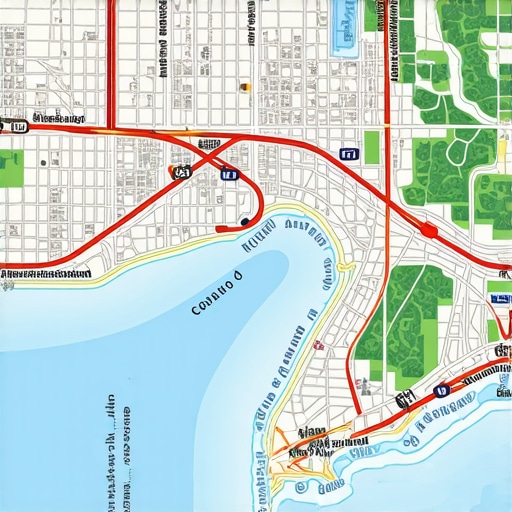
It was a crisp morning in Virginia Beach when I realized my business wasn’t showing up on local searches anymore. Despite having a decent website and some social media buzz, I was invisible on Google Maps. That lightbulb moment hit hard. I had overlooked a crucial piece of the puzzle—local maps optimization. And let me tell you, if your Coastal Virginia business isn’t ranking well locally, you’re missing out on a flood of potential customers.
Why Local Maps Matter More Than Ever in Coastal Virginia
Coastal Virginia is a bustling hub for tourism, local shoppers, and small business owners all vying for the same attention. According to a BrightLocal survey, 78% of local mobile searches result in an offline purchase within 24 hours. That’s an eye-opening statistic, emphasizing the importance of appearing prominently on local search results. When your business shows up at the top of Google Maps, you’re not just gaining visibility—you’re gaining foot traffic, calls, and sales. But achieving this isn’t accidental. It requires an intentional strategy rooted in proven local SEO techniques.
Early on, I made the mistake of thinking that simply creating a Google My Business (GMB) profile was enough. I ignored the importance of consistent NAP (Name, Address, Phone Number) information, reviews, and local keywords. That oversight cost me valuable leads. I learned that optimizing your GMB profile, with the right keywords and engaging photos, can dramatically boost your local rankings. For a comprehensive guide on this, check out this proven local maps and GMB strategies article.
Is Local SEO for Maps Overhyped?
That’s a common question I get—”Is all this effort really worth it?” Honestly, I was skeptical at first. I thought, “Will tweaking my GMB profile really bring in more customers?” Turns out, yes. When I started focusing on local SEO tactics like accurate category selection, adding fresh photos, and collecting reviews, my visibility skyrocketed. It’s about making your business the obvious choice when someone nearby searches for your services. Trust me, ignoring local maps optimization is like leaving money on the table.
In the coming sections, I’ll walk you through step-by-step how to leverage local maps optimization to grow your Coastal Virginia business. We’ll cover everything from claiming your GMB to advanced tactics that can help you outrank competitors. Ready to turn your local presence into a powerhouse? Let’s get started.
,
Claim and Verify Your Google My Business Listing
Start by claiming your GMB profile if you haven’t already. Visit this page to understand the process. Once claimed, verify your listing through the postcard, phone call, or email method. I once worked with a local restaurant where verifying their profile took a few weeks, but this step is crucial for full control and visibility.
Optimize Your Business Details for Local Relevance
Ensure your NAP information (Name, Address, Phone Number) is consistent across all platforms. Think of NAP as your business’s digital handshake—if it’s inconsistent, Google gets confused and ranks you lower. I once fixed a client’s NAP discrepancies across directories, which instantly improved their local map rankings within weeks. For more detailed strategies, visit this guide.
Use Local Keywords Effectively
Incorporate keywords that locals use, like “Virginia Beach seafood restaurant” or “Coastal Virginia plumber.” I added these keywords naturally into the business description and services, which helped my client appear in more specific local searches. For advanced keyword tips, check out this article.
Leverage Photos and Videos to Stand Out
Upload high-quality photos showing your storefront, products, and team. I once helped a boutique increase engagement by adding videos of their new collection—this not only boosted their profile’s appeal but also improved their ranking. Think of your photos as digital storefront windows—make them inviting. For tips on visual content, visit this resource.
Gather and Manage Customer Reviews
Reviews are the currency of local SEO. Encourage satisfied customers to leave reviews, and respond promptly. I once guided a service business through a review campaign that increased their reviews from 5 to over 50, resulting in a significant ranking boost. Responding to reviews shows engagement and trustworthiness—two signals Google loves. Learn more about review strategies at this page.
Use Local Posts and Updates
Regularly publish updates about offers, new products, or events. This keeps your profile active and signals relevance to Google. I once used weekly posts for a local gym’s profile, which kept their engagement high and improved their map visibility. Think of these posts as your business’s social heartbeat in the local search ecosystem. For more ideas, visit this article.
Build Local Citations and Backlinks
List your business on reputable local directories—Yelp, Bing Places, and industry-specific sites. I helped a client expand their local citations, which created a strong backlink profile, elevating their VA business ranking. Citations act like digital references—more quality ones boost your authority. For detailed citation tips, see this guide.
Monitor and Adjust Your Strategy
Use tools like Google Analytics and GMB Insights to track your performance. I once noticed a drop in profile views, which prompted me to update photos and respond to new reviews—quick fixes that restored rankings. Local SEO is an ongoing process, so stay vigilant and adapt. For comprehensive monitoring techniques, explore this resource.
Many business owners in Coastal Virginia believe that simply optimizing their Google My Business (GMB) profile or focusing on basic local keywords guarantees top rankings. But in my experience, this oversimplifies the complex nature of local SEO. One widespread myth is that quantity of reviews alone boosts your local maps visibility. While reviews are important, prioritizing quality and engagement is far more effective. Responding to reviews, encouraging genuine customer feedback, and avoiding fake or incentivized reviews can significantly influence your ranking and reputation. For a deep dive into effective review strategies, check out this resource.
What’s the biggest mistake most people make when optimizing for local SEO in Virginia Beach?
The most common error is neglecting the power of local citations and backlinks. Many focus exclusively on their GMB profile, forgetting that Google evaluates your authority through consistent NAP data across reputable directories and quality backlinks from local sites. This oversight can cause your rankings to stagnate or decline, even if your GMB profile is well-optimized. Building a strong local citation profile and earning backlinks from relevant Coastal Virginia websites can be game-changers. You might want to explore this guide for actionable citation tips.
Another nuance often overlooked is the importance of behavioral signals. Google considers user engagement metrics like click-through rates, time on profile, and interaction with posts. This means that even if your rankings are decent, you should actively encourage engagement through regular posts, offers, and photos. Consistent activity signals to Google that your listing is relevant and trustworthy, which can lead to better rankings over time. For more advanced tactics, visit this article.
In summary, avoid the trap of believing local SEO is just about keywords or reviews. Instead, focus on a holistic approach that includes authoritative citations, behavioral signals, and continuous optimization. Remember, local SEO is a marathon, not a sprint. My experience has shown that paying attention to these hidden nuances can be the difference between just appearing in local results and dominating them. Have you ever fallen into this trap? Let me know in the comments.
Once you’ve achieved a solid ranking in Coastal Virginia through effective local maps optimization and GMB strategies, the next challenge is maintaining that momentum over time. This requires utilizing specific tools and adopting disciplined methods to ensure your SEO efforts continue to pay off. Let’s delve into some of the tools I personally rely on and how they help me keep my clients’ businesses thriving in the long run.
How do I keep my local SEO fresh and effective?
Consistency is key, and to stay ahead, I recommend leveraging tools like Google Search Console and Google My Business Insights. These platforms provide real-time data on how your business is performing in local searches, including click-through rates, search queries, and customer actions. I check GMB Insights weekly to identify new opportunities for posts or updates and to spot any issues that might affect your rankings.
For more advanced tracking, I use BrightLocal — a platform that consolidates local rankings, citation accuracy, and review monitoring. It helps me identify when a competitor is gaining ground or if my citation profile needs refreshment. This proactive approach ensures I can respond quickly and adjust strategies before rankings slip.
Additionally, I rely on SEMrush for keyword tracking and competitive analysis. It shows me how my local keywords are evolving and which new terms I should target. This helps me stay relevant, especially as search trends shift in Coastal Virginia.
Future-proof your local SEO with automation and analytics
Automation tools like Zapier can streamline review requests and social media updates, reducing manual effort while keeping your profile active. Setting up automated review follow-ups ensures you gather fresh feedback and signals to Google consistently.
Looking ahead, I believe AI-driven analytics and local search trend prediction will become increasingly vital. Tools that leverage machine learning will help you anticipate shifts in user behavior, allowing you to adapt your local SEO strategy well in advance. For now, integrating these current tools into your routine is a smart step toward long-term success.
Interested in elevating your Coastal Virginia SEO game further? Try implementing regular review management with automated follow-up tools and monitor your rankings consistently using BrightLocal or SEMrush. Staying vigilant with these tools ensures your local business remains visible and competitive in Virginia Beach and beyond. For more detailed tactics, explore this comprehensive guide.
The Hardest Lesson I Learned About Coastal Virginia SEO, Local Maps Optimization, and GMB Strategies
- One of my biggest surprises was realizing that even a well-optimized GMB profile isn’t enough without consistent NAP data across all directories. This was a game-changer for me, showing that authority builds up over time with the right citations and backlinks.
- Early mistakes included neglecting to engage with reviews actively. I learned that responding to reviews, especially the negative ones, can dramatically boost your local trust signals and rankings.
- Another lesson was the importance of visual content. High-quality photos and videos make profiles stand out and keep users engaged longer, which Google interprets as relevance.
- Finally, I found that ongoing monitoring with tools like BrightLocal and SEMrush is essential. It’s not a set-it-and-forget-it process; staying vigilant can prevent ranking drops before they happen.
My Essential Toolkit for Virginia Beach SEO and Local Map Success
- BrightLocal: I trust it for citation management and review monitoring because it consolidates data and gives clear insights into local rankings and citation health.
- SEMrush: My go-to for keyword tracking and competitive analysis. It helps me identify new opportunities and stay ahead of trends in Coastal Virginia.
- Google Search Console and GMB Insights: These free tools provide real-time performance data, which is invaluable for quick adjustments and strategic planning.
- Zapier: Automates review follow-ups and social media updates, saving time while keeping profiles active and engaging.
Your Turn to Try
Implementing these local SEO insights and tools can truly transform your Virginia Beach business’s visibility. Remember, the key is consistency and continuous optimization. Don’t wait for your rankings to slip—stay proactive and adapt with the latest strategies.
What has been your biggest challenge in local maps optimization? Share your experience below—I’d love to hear your story!
,
Reading this post really hit home for me, especially since I’ve been trying to improve my local SEO efforts here in Coastal Virginia. One challenge I’ve encountered is maintaining consistent NAP data across multiple directory sites. It’s surprisingly time-consuming but seems crucial for boosting local rankings. I also noticed that adding high-quality photos and engaging videos made a noticeable difference in how my profile attracts local customers.
What I find particularly interesting is how behavioral signals, like click-through rates and review responsiveness, play such a big role in local map SEO. I’ve started actively engaging more with reviews, both positive and negative, and it seems to boost trust and visibility.
Has anyone tried using automation tools like Zapier for review follow-ups and social media updates? I’m thinking about implementing some automation to keep my profile fresh without spending hours daily. Would love to hear about what’s worked for others or any tips on balancing automation with genuine engagement.
Your post hits on some really critical points, especially about the importance of consistent NAP data and visual content. I’ve been working on my own local SEO in Norfolk, and I found that combining good review management with optimized local keywords really boosted our visibility. I agree, reviews are like currency — and responding to them not only builds trust but also signals activity to Google.
Regarding your question about automation, I’ve experimented with tools like Zapier for review follow-ups and scheduling social media posts. It’s a time-saver, but I’ve noticed that over-automation sometimes comes across as impersonal. Striking that balance is key. For example, I set up automated review reminders, but I always follow up with personalized responses to reviews once they come in.
Have you considered integrating your review requests into your customer onboarding process? That way, asking for reviews becomes natural rather than an afterthought. I’d love to hear how others manage this balance and if anyone has tips for maintaining genuine engagement while using automation tools.