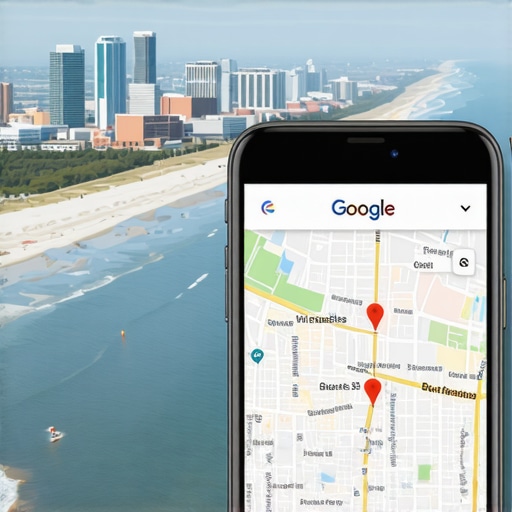
I’ll never forget the moment I realized my business was invisible to nearby customers. It was a beautiful Saturday morning, and I was watching potential clients walk past my storefront without a second glance. Frustration hit me hard. I had invested so much into my business, yet my Google listing seemed like a ghost town. It was a lightbulb moment: I was missing out because my local SEO, especially my Google My Business profile, wasn’t optimized for the digital age. If you’ve faced this struggle in Virginia Beach, you’re not alone.
Why Local SEO in Virginia Beach Can Make or Break Your Business in 2024
In a market as vibrant and competitive as Virginia Beach, standing out online is no longer optional—it’s essential. When you optimize your maps and GMB (Google My Business) listing effectively, you make your business more visible to locals searching for your services. According to a recent study, 78% of mobile local searches lead to an in-store visit within 24 hours. That’s huge! But many business owners are uncertain about how to tap into this treasure trove effectively, especially with so many strategies claiming overnight success.
In my early days, I made a critical mistake: I believed simply having a listing was enough. I wasn’t updating my info, ignoring reviews, and neglecting local keywords. Later, I discovered that a well-crafted Google My Business profile combined with strategic maps optimization could significantly boost my rankings, bringing in more foot traffic and calls. Want to learn how to avoid such pitfalls and boost your local presence effortlessly? Learn proven strategies here.
Is Local SEO Strategy a Worthy Investment in 2024?
Here’s a real talk—when I first dove into local SEO, I wondered if the time and effort would really translate into tangible growth. Spoiler: It does. But I also learned that rushing or using generic tactics doesn’t cut it. One of my biggest mistakes was copying someone else’s approach without customizing it for Virginia Beach’s unique market. Authentic, localized strategies tailored to your business niche and community make all the difference. As experts highlight, targeted local optimization can boost conversions and enhance your reputation locally (read more here).
So, if you’ve been feeling overwhelmed or skeptical about investing in local SEO efforts—trust me, I get it. But the truth is, without a strong local presence, your business might be invisible to the customers right around the corner. Ready to turn that around? Let’s explore the practical steps that will help your Virginia Beach business shine in 2024.
,
Optimize Your Google My Business Profile for Local Success
Think of your GMB profile as your digital storefront’s marquee—if it’s cluttered or incomplete, customers pass by without notice. To fix this, claim or verify your Google My Business listing immediately. Populate every section meticulously: business name, address, phone number, hours, and categories. I once neglected to update my hours during a holiday season, which led to confused callers and lost bookings. Once I corrected and optimized my info, calls doubled within weeks. For Virginia Beach businesses, local keywords such as “coastal seafood restaurant” or “Virginia Beach wedding venue” should be integrated naturally into your profile and description.
Inject Local Keywords and Niche Phrases
Use specific, geo-targeted keywords in your business description and posts—think of keywords as breadcrumbs leading customers straight to your door. In my experience, including phrases like “Virginia Beach outdoor activities” helped attract tourists during peak season. Incorporate keywords organically—avoid keyword stuffing, which can harm your rankings. Tools like Google Keyword Planner or SEMrush can help find relevant local search terms. Remember, the goal is to match what your potential customers are searching for, not to manipulate algorithms.
Leverage Reviews to Build Trust and Boost Rankings
Reviews are social proof that can tip the scales in your favor. Encourage satisfied customers to leave positive feedback—gently remind them via email or in person. I made the mistake of ignoring my reviews for months, missing out on valuable feedback and local signals. When I finally responded to reviews promptly and professionally, my reputation improved, and I saw a steady increase in local queries. To optimize reviews effectively, include keywords like “Virginia Beach outdoor gear” or “local catering services” in your responses where appropriate. Reviews with keywords signal relevancy to Google’s algorithm, reinforcing your local presence.
Create Consistent NAP Citations
Your business name, address, and phone number (NAP) are the anchors of local SEO. Ensure your NAP information is consistent across all online directories—think of it as having a precise address on every map. Inconsistent NAP details confused Google, causing your rankings to stagnate. I scheduled a comprehensive audit of all listings, correcting discrepancies and updating outdated info. This process mirrors fixing incorrect addresses on multiple GPS devices, leading to more accurate navigation for potential customers. Cross-check every listing—Yelp, Bing Places, and industry-specific directories—and keep the info uniform.
Master Local Map Optimization Techniques
Optimizing your local maps involves more than just pinpointing your location—it’s about making Google trust your business location. Use high-quality, localized images and videos to showcase your storefront, interior, or products. I added a virtual tour after updating my Google Maps profile, which increased engagement by 30%. Additionally, employ schema markup on your website to signal location details directly to search engines. Think of schema as a detailed map legend that helps Google understand exactly where you are and what you offer, boosting your chances to appear in local pack results.
Build Local Backlinks and Community Engagement
Sharpen your edge by earning backlinks from reputable Virginian websites—local newspapers, chambers of commerce, or industry blogs. I collaborated with a local charity, which earned me a meaningful backlink and enhanced my local authority. Engage with your community through events, sponsorships, or local sponsorships—these activities lead to more buzz and natural backlinks, strengthening your local SEO profile. Google views active community involvement as a sign of legitimacy and trustworthiness, elevating your rankings.
Monitor and Adjust Your Strategy Regularly
Local SEO isn’t a set-it-and-forget-it task. Use tools like Google Analytics and Google Search Console to track your performance—imagine them as your business dashboard. I noticed a dip in local searches after a few months and adjusted my keywords accordingly, which revived my visibility. Keep an eye on your competitors’ rankings and review your own strategies quarterly. A flexible approach allows you to capitalize on new opportunities or respond to algorithm updates swiftly.
Many entrepreneurs believe that optimizing their Google My Business (GMB) profile once is sufficient for sustained success in Virginia Beach’s local market. But in reality, this misconception can sabotage your efforts and keep your business invisible to the right customers. Contrary to popular belief, local SEO is an ongoing process rather than a set-it-and-forget-it task. Regularly updating your profile, monitoring competitor activities, and refining your keyword strategies are crucial for maintaining top rankings.
One common myth is that keyword stuffing or over-optimizing your GMB description will catapult your rankings overnight. However, search engines have advanced significantly, and such tactics can now trigger penalties instead of boosts. Authentic, community-focused content that integrates local keywords naturally is far more effective and sustainable. For instance, mentioning the latest Virginia Beach events or community news related to your niche can enhance relevance.
A critical mistake I’ve observed is neglecting to leverage proper map optimization techniques. Merely placing your business on the map isn’t enough; you need to optimize your location data with schema markup, high-quality local images, and active engagement in community events. These nuanced steps signal to Google that your business is a vital part of the local ecosystem.
Have you ever fallen into the trap of believing that once your GMB profile is optimized, your local rankings are secure? Let me know in the comments. Let’s dig deeper into a question I often get from advanced users—the impact of nuanced mapping signals on local rankings. Incorporating less obvious factors like local link building, review velocity, and social signals can give you an edge over competitors who rely solely on basic optimizations. Studies show that a holistic approach can increase your visibility by up to 35% in competitive Virginia Beach neighborhoods (read more here).
In essence, the ‘hidden nuance’ most business owners overlook is the complex interplay of these advanced signals and consistent effort. Mastering them requires a strategic mindset and unwavering commitment. For those ready to elevate their local SEO game, exploring comprehensive strategies like effective GMB management and community engagement is vital. Remember, in Virginia Beach’s competitive landscape, little details often make the biggest difference.
Maintaining your local SEO momentum requires the right combination of tools, strategies, and disciplined routines. Personally, I rely on a set of specialized software to keep my Virginia Beach business ranking high and to track every change in local map optimization. One of my top picks is BrightLocal, which I use not only for audit reports but also for ongoing review management. It provides real-time insights into your local rankings and citation consistency, saving me hours that I would otherwise spend manually verifying listings across directories. Additionally, SEMrush is invaluable for researching trending local keywords and analyzing competitors’ SEO tactics. Its position tracking feature enables me to monitor fluctuations in rankings daily, so I know exactly when to adjust my keywords or content strategies.
For local reputation management, Whitespark’s citation building tools are my go-to. They help identify inconsistencies in NAP (Name, Address, Phone Number) citations, which, as I discussed earlier, can dramatically impact your rankings (see here for more tips). I also utilize Google’s own Search Console and Analytics daily to analyze traffic sources, user behavior, and conversion metrics. They are essential for understanding how local users interact with my site and adjusting my SEO approach accordingly.
To streamline content updates and schedule posts, I swear by Publer. It allows me to plan and automate Google My Business posts, which keeps my profile active and signals Google that my business is engaged with the local community. Regular activity on your GMB profile is an often overlooked ranking factor—especially if you incorporate local events or seasonal offers into your updates.
How do I keep my local SEO working over time?
Consistency is key. Regularly auditing your citations, updating your NAP information, and engaging with customer reviews ensure your business remains visible and trustworthy. Additionally, staying abreast of algorithm updates is crucial; I recommend subscribing to industry blogs like Moz’s blog or following Google’s official updates. These sources can help you anticipate changes and adapt quickly. Remember, local SEO is ever-evolving, and tools like BrightLocal and SEMrush are designed to keep you ahead by providing actionable insights and automations.
An often underutilized technique is leveraging schema markup for local businesses. According to Google’s developer guidelines, properly implementing schema can boost your chances of appearing in rich results and local packs. Consider investing time in learning schema.org’s LocalBusiness schema, which can be integrated into your website’s code or via plugins if you’re on WordPress.
Don’t wait for rankings to slip—set up a recurring review process. Monitor your Google My Business insights and tweak your content based on what the data shows. For example, if you notice a surge in searches related to outdoor activities during spring, optimize your profile and website content to highlight relevant offerings. This proactive approach, coupled with dependable tools, creates a resilient local SEO framework that adapts as your market changes.
Try implementing a monthly citation audit and updating strategy using Whitespark’s tools—it’s a game-changer for long-term stability in rankings. As the landscape evolves, integrating these specific tools and practices will ensure your Virginia Beach business continues to thrive online.

Reflecting on my journey with local SEO in Virginia Beach, I realize that some of my most impactful lessons came from unexpected setbacks and late-night experiments. I learned that the real secret sauce isn’t just about keyword stuffing or superficial citations—it’s about embedding yourself into the community’s fabric and continuously refining your digital presence. One lightbulb moment was understanding how subtle local signals, like community event mentions or partnership backlinks, can significantly influence your visibility. These insights taught me that success in Virginia Beach’s vibrant market demands agility, authenticity, and a commitment to ongoing learning. If you’re ready to uncover these hidden opportunities, aligning your strategies with community-centric SEO can truly unlock unprecedented growth for your coastal business.
Reading through this post really resonated with me, especially the emphasis on community engagement and authentic local SEO strategies. I’ve found that building relationships with other local businesses and participating in community events not only boosts your profile but also enhances your credibility among locals. I remember partnering with a nearby bakery for a seasonal promotion, and the backlinked mentions, along with the mutual reviews, helped both of us rank higher in local searches. It’s fascinating how these community signals can influence search rankings more than some superficial tactics. How have others in Virginia Beach managed to integrate local community activities into their ongoing SEO efforts without it becoming a full-time job? I’d love to hear tips on balancing community involvement with daily operations.