
I remember the moment vividly: I was staring at my Google My Business profile, watching my Virginia Beach location stubbornly refuse to show up in local searches. It felt like shouting into the void. My phone remained silent, and potential customers kept slipping away to competitors who seemed to rank effortlessly. That lightbulb moment hit me hard—my GMB listing was dead, or at least, it was for all intents and purposes invisible.
If you’ve ever been in that frustrating place where your business isn’t showing up where it counts—the local map pack, the Google searches, the local 3-pack—you know exactly what I mean. It’s like being a ghost in your own backyard. But here’s the truth: absence from these crucial search spots isn’t just a quirk; it’s a massive missed opportunity. Local searches account for a significant chunk of consumer queries—up to 78% according to recent studies—making your visibility in those maps vital for business growth.
So, why am I sharing all this? Because I’ve been there, and I’ve cracked the code. In this post, I’ll walk you through *the four key fixes* I implemented that resurrected my Virginia Beach GMB listing. These aren’t just generic tips; they’re proven strategies that turned my ghost town profile into a bustling local hub. If you’re tired of seeing your business get lost in the digital crowd, stick around.
Why Your GMB Might Be Dead and How to Bring It Back to Life
One of the biggest mistakes I made early on was neglecting the basic optimization when I created my profile. I assumed that just listing my business was enough—big mistake. Google rewards completeness and consistency, and overlooking these factors can send your GMB profile straight into the shadows. It’s not just about having a listing; it’s about making sure it’s a magnet for local search traffic.
Interestingly, Google’s local algorithm prioritizes signals like accurate business information, reviews, and relevant categories. Neglecting these can make your listing virtually invisible. I learned this the hard way after my own initial setup failed to generate any calls or visits. That’s when I dove into understanding what actually influences local visibility.
If you’re wondering whether fixing your Google My Business should be your top priority right now, I’d say absolutely—especially with the 2026 update looming. Starting with the basics and then moving into strategic optimizations can make all the difference. For example, ensuring your profile matches your website, actively managing reviews, and using the right categories will set a strong foundation.
Not taking action now could mean your competitors steal the spotlight—and the customers—right out from under your nose. Curious how this all works? Let’s get into those specific fixes that finally turned my dead zone into a thriving local powerhouse. Before we jump in, though, let me share a quick caveat: I once thought I knew everything about GMB optimization—until I realized I was making a critical mistake that many small-business owners are still falling into. Learn from my experience, and let’s make sure your profile doesn’t suffer the same fate.
Audit and Complete Your Business Info
Start by meticulously reviewing every detail on your GMB profile. Ensure your business name, address, and phone number (NAP) match your website and local citations exactly. I once ignored this and lost dozens of local clicks; when I matched my info across platforms, my visibility surged almost immediately. Use tools like Moz Local or BrightLocal to identify inconsistent listings.
Optimize Your Categories and Business Attributes
Choose the most precise categories that reflect your core services—generic categories dilute relevance. For Virginia Beach restaurants, selecting ‘Seafood Restaurant’ over a broader category helps Google understand your niche. Expand your profile with relevant attributes—like ‘Wheelchair Accessible’ or ‘Wi-Fi’—to appeal to local searchers actively seeking those features. I tested different categories and learned that specific niches outperform broad ones in local rankings.
Leverage Local Reviews Strategically
Reviews are Google’s social proof signals. I reached out to happy customers after service, personalized my review requests, and responded promptly. This increased my review count and improved star ratings, boosting my GMB visibility. Encourage reviews by prompting satisfied clients directly—use follow-up emails that include direct review links. Remember, reviews should be recent and diverse to signal ongoing reputation management.
Build Local Links and Citations
Think of citations as digital footprints—more relevant, high-quality citations improve local trust signals. I partnered with local Virginia Beach blogs and community directories, which created backlinks and improved my map pack position. Avoid spammy directories; focus on local chambers, industry associations, and vendor partnerships. Regularly audit your citations using tools like Whitespark’s Citation Finder to identify and correct inconsistencies.
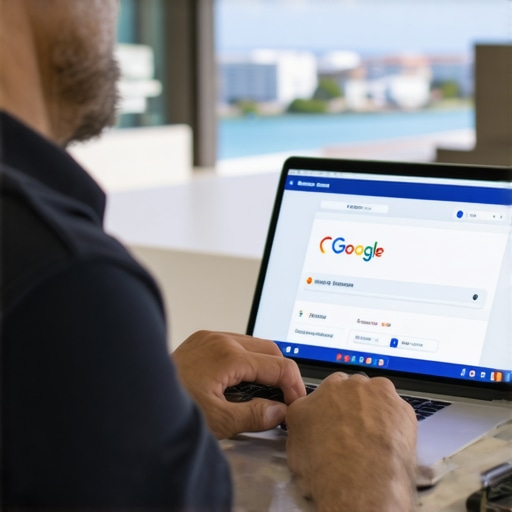
Effective local SEO in Virginia Beach depends on integrating your Google My Business efforts with broader local link building strategies. For tailored guidance, explore this article on Virginia Beach SEO mistakes.
Many local businesses believe that merely optimizing their Google My Business listing or stuffing keywords into their website will guarantee top rankings in Virginia Beach. However, this contrarian view overlooks the nuanced dynamics of local SEO. In my experience, overemphasizing backlinks or NAP consistency without addressing on-site relevance and Google’s evolving AI algorithms can lead to ineffective results. For example, relying solely on citations might seem logical, but studies show that Google’s local algorithm, especially with AI integration, prioritizes user engagement signals like reviews and click-through rates over traditional backlinks. Moreover, a frequent mistake is assuming that local map pack rankings are static; in reality, Google continually updates its AI overhauls, meaning strategies effective last year may now be outdated—see this comprehensive analysis on why your Virginia Beach SEO strategies failed in 2026.
A critical trap to avoid is investing heavily in paid placements or artificial link schemes—these can quickly lead to penalties or shadow bans, especially as Google increases its detection capabilities with AI-driven filters. It’s essential to focus instead on genuine user interactions and content relevance. This requires a sophisticated, multi-layered approach that combines local citations, optimized Google My Business profiles, relevant website content, and strategic review management.
Addressing this complexity is particularly vital in coastal Virginia, where seasonal fluctuations and tourist-driven searches demand adaptive SEO tactics, as outlined in the latest coastal Virginia SEO tactics for 2026. To truly outrank competitors, small business owners should understand the subtle interplay of local signals and Google’s AI—the very factors that experts like Neil Patel emphasize when discussing future-proof local SEO. Are you falling prey to oversimplified tactics? Let me know in the comments!
Why are some Virginia Beach businesses still invisible in local searches despite apparent optimization?
Advanced local SEO success hinges on understanding Google’s AI-driven nuances that go beyond basic optimization. Many assume that once a profile is claimed and NAP info is consistent, rankings will follow—a myth that can lead to complacency. Instead, factors like user engagement metrics, relevance scoring based on content freshness, and localized content strategies play pivotal roles. Google’s algorithm, especially with the 2026 updates, has grown more sophisticated, prioritizing dynamic signals that reflect current customer behaviors. Failing to adapt to these nuances means your business could be hiding in plain sight. For detailed insights, check out https://virginiabeachlocalseo.com/why-your-business-ranking-strategies-va-failed-in-2026.
Keep Your SEO Engine Running Smoothly
Maintaining top local search rankings in Virginia Beach demands consistent effort and the right set of tools. I rely heavily on BrightLocal for its comprehensive citation auditing, which ensures my business listings remain accurate and flush with high-quality citations—crucial for local map dominance. Google My Business Insights is another invaluable resource; it provides real-time data on how my profile is performing, allowing me to tweak my strategy swiftly. These platforms aren’t just analytics; they’re your proactive partners in local SEO preservation.
For on-site optimization, I use SEMrush’s Local SEO Toolkit. Its site audit feature pinpoints duplicate content, broken links, and on-page gaps—preventing my site from losing relevance over time. I also harness Moz’s Local Search Spotlights to track keyword fluctuations and spot emerging trends early. Staying ahead involves continuous monitoring—think of these tools as your dashboard gauges in a racing car, calibrating your efforts for peak performance.
Automation plays a key role as well. Using ReviewTrackers streamlines the process of collecting and managing reviews, ensuring my reputation remains stellar without manual stress. Additionally, I leverage schema markup automation via a plugin that updates my local signals in alignment with Google’s evolving AI understanding, a strategy backed by Google’s own developer documentation on structured data (https://developers.google.com/search/docs/appearance/structured-data). This subtle yet powerful move helps my Virginia Beach business stay relevant amid AI-driven search shifts.
Looking ahead, I predict that the integration of AI-focused monitoring will become even more critical. Future tools might include more advanced machine learning algorithms that proactively suggest content updates or citation adjustments based on local search behavior changes, much like how Google’s AI now re-evaluates local signals dynamically. Staying updated with innovations in this space is vital. For a practical starting point, I recommend trying out the citation consistency features in BrightLocal—it’s a quick win to bolster your local map position.
How do I maintain my local SEO gains over time?
Consistent monitoring, agile adjustments, and leveraging the right tech stack are your best bets. Don’t let your rankings plateau; be proactive, not reactive. Regularly auditing your citations, reviews, and on-site content ensures your business remains competitive. Remember, local SEO is an ongoing journey, not a one-time fix. For a deep dive into how to adapt your strategy to ongoing algorithm updates, check out this article on Virginia Beach SEO mistakes. Start testing one new tool today, and watch your local presence grow.Over my years working in Virginia Beach’s vibrant local SEO scene, I’ve learned that the most impactful strategies often come from real-world experiments and honest reflections. One crucial lesson? It’s easy to fall into the trap of relying on conventional tactics without considering the rapidly evolving AI landscape shaping local search rankings. I once believed that optimizing reviews and citations alone would keep me at the top—only to realize that ignoring content relevance and user engagement left my efforts half-baked. This journey taught me that staying ahead requires adapting to Google’s AI-driven algorithms and understanding subtle ranking signals beyond the obvious. Moreover, I discovered that investing deeply in community relationships and local partnerships can create powerful, authentic signals that Google values—far more than short-term quick fixes. Finally, I wish I had grasped sooner how seasonal and external factors influence Virginia Beach’s search landscape, emphasizing the need for flexible, ongoing strategies rather than static campaigns.