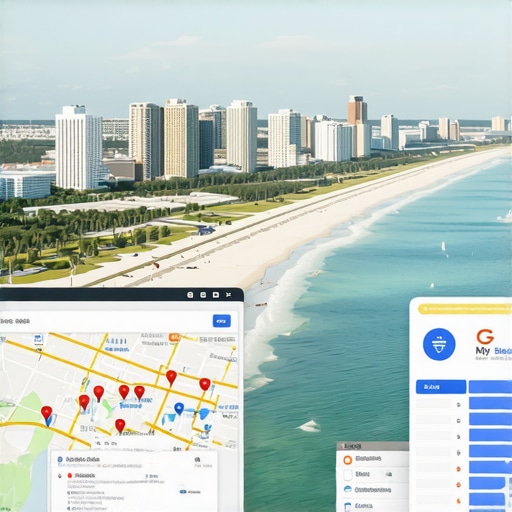
It was a frustrating morning when I finally realized why my Virginia Beach-based business wasn’t ranking like I expected. Despite pouring hours into SEO, my local visibility remained stubbornly low. I remember sitting at my desk, staring at the Google search results, wondering what I was missing, feeling that familiar mix of disappointment and determination. That lightbulb moment led me down a path of discovery—discoveries that transformed my approach and, ultimately, my business. If you’ve ever felt stuck trying to attract local traffic in Virginia Beach, I get it. That’s exactly what I want to help you with today.
Why You Need to Master GMB and Local Maps Now More Than Ever
Coastal Virginia is a competitive market, and local search optimization isn’t just a nice-to-have anymore—it’s the backbone of any successful business strategy. With more consumers turning to Google for local services, your visibility hinges on how well you optimize your Google My Business (GMB) profile and local maps. According to recent studies, 78% of local mobile searches lead to an offline purchase within 24 hours, making your local SEO efforts critical for coastal growth. If you’re ignoring this wave of potential customers, you’re leaving money on the table and letting competitors snatch your slice of Virginia Beach’s thriving market.
Is Local SEO Really Worth the Hype?
I used to dismiss some of these strategies as hype—until I personally experienced the difference. In my early days, I made a costly mistake: I neglected to verify my GMB listing and didn’t optimize my local map presence. The result? Low rankings and even fewer local calls. It wasn’t until I invested in proper local map optimization that my visibility skyrocketed. That mistake taught me a crucial lesson: local SEO is not just a trend; it’s a fundamental pillar of Coastal Virginia business growth. If you’re skeptical about whether all this effort pays off, I encourage you to check out this guide to some of the most effective strategies for 2024.
Now, with that reassurance, let’s dive into how you can turn this knowledge into action and start climbing those local rankings today.
.
Claim and Vet Your Google My Business Profile
The first step I took was claiming my GMB profile and verifying my business with Google. It’s like claiming ownership of your digital storefront—without this, you’re invisible to local searches. I remember submitting my verification postcard, which took a couple of weeks, and during that pause, I kept revisiting my profile to ensure all details were accurate. Once verified, I optimized every section: business name, address, phone, hours, and categories. Ensuring consistency across online directories reinforces your local credibility, much like building a solid foundation for a house.
Add Precise and Location-Relevant Details
Next, I updated my profile with high-quality photos—showing the interior, exterior, and key products. Think of this as the storefront window that invites customers in. For best results, I used real photos, not stock images, making my profile authentic. Precise business categories and tags are like signposts directing Google’s algorithm. I included relevant keywords naturally—like “Virginia Beach catering”—to help Google understand my niche. To further enhance my visibility, I added a detailed business description packed with geographically relevant keywords, similar to how planting specific flowers can attract certain pollinators.
Build and Manage Local Citations Consistently
After optimizing my GMB, I focused on citations—mentions of my business’s name, address, and phone number across local directories like Yelp, Bing Places, and industry-specific sites. I approached this systematically, auditing existing listings for consistency and correcting any discrepancies. Think of citations as digital word-of-mouth that boosts your authority. I also ensured my NAP (Name, Address, Phone) info matched exactly everywhere, much like turning in perfect homework—no typos, no mismatched info. For extra leverage, I used local keywords in accompanying descriptions, which helped signal to Google my prominence in Virginia Beach.
Encourage and Manage Customer Reviews
Reviews became my secret weapon. I reached out to satisfied customers, politely asking them to leave positive feedback. I made it easy by sending direct links, akin to giving them a one-click invitation. Responding promptly to reviews, whether positive or negative, showed Google I was engaged and attentive—like maintaining a well-lit storefront that invites foot traffic. I learned that reviews containing relevant keywords, such as “Virginia Beach plumber,” further boosted my ranking for those search terms, reinforcing the importance of strategic review management. Regularly monitoring reviews also kept my profile fresh and trustworthy.
Leverage Local SEO Strategies and Tools
To ensure ongoing success, I used tools like Google Insights and Moz Local to analyze my profile’s performance and identify gaps. I also kept an eye on competitors’ profiles—think of it as understanding your neighborhood’s landscape—to find new opportunities. Consistently updating posts, special offers, or news kept my profile active, signaling to Google that my business was lively and relevant. For comprehensive tactics, I referred to detailed guides like this resource to refine my approach.
Maintain Location Accuracy and Consistency
Finally, I double-checked that my physical address matched my website and social profiles. Any mismatch was like a confusing sign in the fog—difficult for Google to figure out. This precision helped my business appear in local map packs, which are prime real estate in Virginia Beach search results. Regular audits and updates ensure my information stays current, much like tending a garden to keep it flourishing. By aligning all these details, I improved my chances of appearing at the top when locals searched for services I provided, which directly increased foot traffic and inquiries.
Many local business owners in Virginia Beach and Coastal Virginia fall prey to misconceptions about Google My Business (GMB) and local maps optimization. One prevalent myth is that simply claiming and verifying your GMB listing guarantees top rankings. In reality, advanced strategies and nuanced understanding are essential to outperform competitors and secure prime local real estate. Failing to recognize the importance of ongoing optimization, reviews, and accurate citations leads to overconfidence that can sabotage your efforts.
For example, some believe that keyword stuffing in your business description or reviews will boost rankings. However, Google’s algorithms have become sophisticated, prioritizing genuine engagement and relevance over keyword spam. According to local SEO expert this guide, curated, authentic content always beats manipulative tactics.
Are You Making This Critical Mistake in Local SEO?
Another common trap is neglecting consistency across all online platforms. Discrepancies in NAP (Name, Address, Phone) data across directories and social media can significantly harm your local rankings—it’s like giving Google conflicting signals about your location or legitimacy. Maintaining data uniformity is a subtle but impactful factor often overlooked by beginners. According to Moz Local’s recent study, inconsistent citations can reduce visibility by up to 20%.
To maximize your Virginia Beach SEO success, dive into comprehensive, proven tactics found here and ensure your profile and citations are pristine.
One nuance that many overlook is the importance of local intent signals. Google is increasingly prioritizing user behavior and intent, meaning that engagement metrics such as click-through rates, call clicks, and review sentiment can influence your rankings significantly. Simply having a well-optimized GMB profile isn’t enough; you must actively manage and enhance these signals.
Remember, local SEO in Virginia Beach is an evolving landscape. Strategies that worked last year may now be outdated due to algorithm updates. Staying ahead requires continuous learning and adaptation. For instance, in 2024, integrating Google’s latest features like booking buttons or Q&A sections can give you a competitive edge. Need a detailed game plan? Check out this resource for top tactics.
Make no mistake—local SEO requires more than just superficial tweaks. It’s about understanding Google’s evolving algorithms, leveraging nuanced signals, and avoiding common pitfalls like inconsistent citations or manipulative tactics. Have you ever fallen into this trap? Let me know in the comments, and feel free to ask questions about how to elevate your Virginia Beach business ranking today.
Maintaining a strong local SEO presence, especially for Virginia Beach businesses, requires not only initial optimization but ongoing efforts with the right tools and methods. Personally, I rely on a combination of advanced software and proven workflows to keep my business ranking consistently high in local maps and Google My Business (GMB). One tool I can’t do without is BrightLocal. I use it daily to audit citations, monitor reviews, and track keyword rankings. Its comprehensive dashboard offers real-time insights into my local SEO health, allowing me to quickly identify and fix inconsistencies—crucial for staying ahead in the competitive Virginia Beach market.
Additionally, Moz Local has become integral to my routine. I particularly appreciate its ability to ensure NAP consistency across hundreds of local directories automatically, saving hours of manual correction. As local citations are foundational to improving rankings, tools like Moz Local help me maintain data accuracy, which Search Engine Journal affirms as vital for sustained local visibility (source).
Another critical part of my toolkit is Google Search Console, which I leverage to monitor site performance and fix issues that might affect local search visibility. Over time, I’ve learned that regular micro-optimizations—such as updating service descriptions with targeted keywords and checking for duplicate listings—are essential for long-term success in VA’s coastal SEO landscape.
In terms of workflow, I schedule routine audits every quarter to review citation consistency, update GMB categories, and respond to recent reviews. This systematic approach ensures that my profile remains vibrant and trustworthy, which Google increasingly values for local rankings. I also utilize Google Insights to analyze what local customers are searching for and adjust my content and services accordingly—aligning my offering with the evolving regional demand.
Looking into the future, I predict that harnessing automation and AI-driven tools for reviews and content updates will become even more critical. For example, integrating review response automation while maintaining authenticity could save time and bolster engagement. The trend toward smarter local SEO tools is evident, and early adoption will likely give coastal Virginia businesses a competitive edge. To tap into these emerging opportunities, start by implementing advanced citation management with Moz Local and setting up automated review monitoring—it’s what I recommend for maintaining and scaling your local SEO efforts effectively.
How do I keep my local SEO strategies effective over time?
The key is regular maintenance, using a combination of data-driven tools and manual checks. By continuously auditing your citations, optimizing GMB listings, and engaging with customer reviews, you reinforce your business’s authority and visibility. For deeper insights and tailored tactics, I suggest exploring this comprehensive guide. Remember, as algorithms evolve, so should your strategies. Commit to a routine, stay informed about local SEO trends, and leverage the right tools to keep your Virginian beach business thriving in the long run.
The Hardest Lesson I Learned About Google My Business in Virginia Beach
One pivotal realization was that claiming my GMB profile was just the starting point—ongoing optimization, review management, and data consistency are what truly drive local rankings. Without continuous effort, even the most optimized profile can fall behind. This taught me to see SEO as a living process rather than a one-time setup.
How I Discovered the Power of Authentic Engagement
Engaging genuinely with customers through reviews and updates built trust and boosted my visibility. I learned that authentic content and timely responses signal to Google that my business was active and trustworthy, which is especially vital in the competitive Virginia Beach market.
My Secret Weapon in Staying Ahead of Algorithm Changes
Regularly monitoring citation accuracy with tools like Moz Local and keeping my info updated across all platforms helped me adapt swiftly to algorithm updates. This proactive approach ensures sustained top rankings and continuous growth in Virginia Beach’s coastal business scene.
Curated Resources for Real Results
To deepen my understanding, I relied on tools like BrightLocal for citation audits, Google Search Console for performance tracking, and Moz Local for data consistency. These resources provided actionable insights that made my local SEO efforts precise and effective. For comprehensive tactics, I recommend exploring this guide.
Your Next Move Starts Today
Mastering local maps and GMB optimization in Virginia Beach is an ongoing journey, but every step forward brings new opportunities. Stay committed, leverage the right tools, and remember—consistent effort is your best ally in the coastal Virginia SEO landscape. Are you ready to elevate your local visibility and unlock your business’s full potential? Let me know in the comments below—what’s your biggest challenge with local SEO right now?
Reading about the importance of Google My Business and local map optimization really hit home for me. I own a small retail shop in Virginia Beach, and for years I relied solely on word of mouth and social media. After going through this post, I realize how much I’ve overlooked the power of a well-optimized GMB profile. I started updating my profile with new photos and responsive reviews, and I’ve already noticed an increase in local inquiries. One thing I struggle with is maintaining citation consistency across multiple directories—has anyone found a good automation tool that can help with this? It feels so time-consuming to manually check each one. Would love to hear suggestions or experiences on managing citations effectively while juggling a busy schedule.
This post really hits home for me, especially about the ongoing effort needed for local SEO success. Like many Virginia Beach entrepreneurs, I initially thought claiming a GMB profile would do all the heavy lifting, but I quickly learned that continuous optimization and review management make all the difference. I’ve been experimenting with BrightLocal to keep my citations consistent, and it’s been a game changer in saving me time. Consistency across directories is crucial, but it can be quite time-consuming without the right tools. I’m curious—has anyone else used automation platforms for citation management? What’s been your experience with them in terms of accuracy and ease of use? The landscape is always changing, and I believe integrating these tools is essential for staying competitive in the coastal Virginia market.